Saturday, August 22, 2026
Tuesday, June 30, 2026
El Dorado Lives!
EL DORADO LIVES!
Just like the mythical Gilded Man, Latin America is at once an ancient land of mystery and intrigue and a continent of thriving contemporary culture. From the empty stone corridors of the vast ghost cities of Tiahuanaco, Teotihuacan and Machu Picchu, to the modern, pulsating metropolises of Rio de Janeiro, Buenos Aires and Santiago, Latin America has captivated and seduced both visitors and invaders alike.
Adventure Associates is delighted to announce the release of the all-new 'Latin America', a comprehensive guide to travel and adventure opportunities throughout Mexico, Central and South America.
"As Australia' first and longest established tour and travel operator to South America, we've distilled over thirty years experience into our latest publication," says Stewart Campbell, CEO of Adventure Associates.
The new brochure contains Adventure Associates' evergreen Rhumba', and 'Inca Mysteries' as well as the ecologically-focused "Galapagos and Amazon Adventure".
These core itineraries can be enhanced with tours to virtually any region between Mexico and Tierra del Fuego and to outlying destinations such as the Galapagos, Easter Island and the Falklands.
Latin America and the Caribbean are currently enjoying a healthy resurgence as adventure hungry travellers seek new, exciting destinations to satisfy their cravings. For example, LAN (formerly LanChile) are reporting increases up to 26% in Australians travelling to South America*.
Quest for the Furthest South by Ship
26 August 2005
For Immediate Release
THE QUEST FOR THE FARTHEST SOUTH BY SHIP
Adventure Associates' newest icebreaker expedition to deepest Antarctica will attempt to better the 90-year-old record held by the famous Norwegian, Fridtjof Nansen aboard the Fram.
The year 1911 was the apex of Antarctic exploration. The famous Norwegian explorer, Roald Amundsen, pipped Scott to the South Pole and the 'heroic' Englishman and his crew perished on their return.
When Amundsen's supply ship, the Fram, captained by Nansen, moored in the Bay of Whales on 14 January 1911, she immediately set a new record for furthest south by any ship. Numerous attempts and claims were made since then, but Fram's record stands undisputed. Almost 90 years to the day, Kapitan Khlebnikov made an attempt in unusually favourable ice conditions, but fell tantalisingly short.
Current Records:
Fram - 14 Jan to 15 Feb 1911 - 78°41'S
Kapitan Khlebnikov - 11 Jan 2001 - 78°37'S
The Great Antarctic Explorers - Search for the Far South:
21 January - 14 February 2006 (25 days):
Lyttelton, New Zealand to Hobart, Tasmania
In early February 2006, Kapitan Khlebnikov will again attempt to better this enduring feat at the Bay of Whales during her expedition cruise, "The Great Antarctic Explorers". Apart from a rare opportunity to be part of history, passengers will also visit the fabled Ross Sea region, the sub-Antarctic Islands, Cape Royds and Cape Adare as well as McMurdo Sound and the newly remodelled Drygalski Ice Tongue - thanks to its collision with the world's largest iceberg - B15a.
Wonders of the Ross Sea - In the Footsteps of Shackleton & Scott:
29 December 2005 - 21 January 2006 (24 days):
Hobart, Tasmania to Lyttelton, New Zealand
The Kapitan Khlebnikov will also make an earlier voyage "Wonders of the Ross Sea" which will focus on exploring the, ice-choked Ross Sea with special New Year's celebrations en route to the Antarctic continent. A special highlight is exploration of the seldom-visited Dry Valleys by helicopter. This remote area is a remarkable landscape of wind-eroded rocks and desert scenery more reminiscent of Mars than Earth.
Both Kapitan Khlebnikov voyages visit the Sub-Antarctic Islands of New Zealand and Macquarie Island en route and cruise prices start from US$13,900 per person triple share.
For further information contact Adventure Associates on 1800 222 141, email on mail@adventureassociates.com or visit www.adventureassociates.com/antarctica/
**************
Media Enquiries:
For brochures, images or further details, please contact Brenda Milanes, Adventure Associates on 02 9389 7466 or email: brenda@adventureassociates.com
Across the Top - Australia and Oceania
5 October 2005
For Immediate Release
ACROSS THE TOP - AUSTRALIA & OCEANIA 2005 - 2006
Adventure Associates has launched their new Australia and Oceania brochure, which offers a variety of unique voyages aboard the new, luxury expedition ship, "Oceanic Princess", and the popular "Coral Princess" vessels in late 2005 and 2006. All voyages are of an expedition nature with on-board lecturers providing in-depth understanding of the region's history, environment and of the many diverse cultures visited.
Northern Top End: Between April and October 2006, passengers have a choice of exploring Australia's Northern Top End - the Kimberley region from Darwin to Broome, Across the Top End from Cairns to Darwin, and Cape York from Cairns to Thursday Island. Few people have the opportunity to visit these remote regions due to the very limited road access. Cruising is the ideal way to explore the many rivers and gorges and makes contact with the diverse cultures of Aboriginal, Torres Straight and Tiwi Islander communities. All voyages operate in reverse.
Combined Cruises 10% Discount
Passengers combining any two consecutive cruises, e.g. The Kimberly & Across the Top End - will receive a 10% discount from the lower priced cruise. Overnight accommodation onboard in Darwin is included, if required.
Great Barrier Reef: A series of 3 night cruises throughout 2006 to the Great Barrier Reef from Townsville or Cairns will discover a paradise of remote and uninhabited islands where snorkeling on the fringing reefs of Lizard Island and Pelorus Island is exclusive to Coral Princess Cruises.
Tasmania: From 24 December 2005 to 4 January 2006, the "Oceanic Princess" will cruise from Sydney to Hobart, Tasmania beginning with Christmas on board, joining the start of the Sydney to Hobart yacht race and continuing on to visit Tasmania's spectacular bays and wilderness areas.
New Zealand: A spectacular voyage along New Zealand's stunning coastline from Milford Sound to Auckland will appeal as will a voyage through Melanesia from Noumea, New Caledonia to Rabaul, Papua New Guinea visiting Vanuatu and the Solomon Islands along the way.
Papua New Guinea: Mysterious Papua New Guinea is, in the truest sense, the last frontier on Earth. Its surrounding waters support unparallel bio-diversity and it is a place of rich cultural diversity. The "Oceanic Princess" will sail from Cairns to Raboul (or reverse) visiting many of Papua New Guinea's rarely visited, tropical island groups. Shore visits will offer an opportunity to experience traditional, island culture.
The 63 metre "Oceanic Princess" offers amenities and facilities comparable to much bigger cruise ships while allowing access to remote reefs and islands inaccessible to larger vessels. Accommodating 76 guests in 38 spacious, outside staterooms with en-suite facilities, with a choice of triple and twin through to king size doubles. The vessel maintains an open bridge policy and carries a fleet of zodiac inflatable and a glass bottomed boat for coral viewing.
The shallow draft and maneuvreability of the Coral Princess vessels make them ideal to safely navigate the often uncharted waters of the Great Barrier Reef, Torres Strait, Arafura Sea and Timor Sea. Both vessels are air-conditioned and accommodate 48 passengers in a choice of standard cabins to spacious deluxe staterooms, all with private bathrooms.
For further information contact Adventure Associates on 1800 222 141, email on mail@adventureassociates.com or visit www.adventureassociates.com/oceania
-------------
Media Enquiries:
For brochures, images or further details, please contact Brenda Milanes, Adventure Associates on 02 9389 7466 or email: brenda@adventureassociates.com
Emperor Penguin Safari
31 MARCH 2006
For Immediate Release
NEW DATES FOR EMPEROR PENGUIN SAFARI
Adventure Associates, Australia's first and longest established Antarctic tour operator, announces 2007 dates for the ONLY dedicated Emperor Penguin expedition.
The enormous success of the documentary "March of the Penguins" has created unprecedented demand for expeditions to see these amazing animals in their natural habitat.
The "Snow Hill Island Safari" visits these superb creatures during November, the end of their arduous breeding cycle, when chicks and adults are preparing to head out to sea.
There are only two 14-day Emperor Penguin expeditions planned in 2007:
The per person triple cabin rate is US$9,900. The standard twin cabin rate is US$14,500 per person.
It is expected these dates will fill very rapidly, so early booking is encouraged.
Contact Adventure Associates on 1800 222141 or visit www.adventureassociates.com for more information.
Media Enquiries:
For brochures, images or further details, please contact Stewart Campbell, Adventure Associates on 02 8916 3010 or email: stewart@adventureassociates.com
Editors’ Note:
Adventure Associates, founded by current chairman and managing director, Dennis Collaton, in 1973, is Australia's longest established tour operator throughout Latin America, specialising in group and FIT travel to South America, Mexico and Central America. Tours range from general interest to city stopovers to eco tours such as the Galapagos and Amazon. Adventure Associates also pioneered travel and cruises to Antarctica - with expedition cruises sailing from South America to the Antarctic Peninsula, as well as icebreaker cruises ex Australia to Antarctica's Ross Sea region. Other travel products from Adventure Associates include Arctic expedition cruises, Kimberley cruises, Bhutan and Madagascar.
Desert Dunes and Curious Blooms
12 April 2006
For Immediate Release
Desert Dunes and Curious Blooms
Namibia & South Africa : 23 August - 17 September 2006
Adventure Associates has released details of their Namibia & South Africa tour for August/ September 2006. Travelling at the height of Spring, the tour concentrates on the stark yet stunning desert landscapes of Namibia and the plethora of springtime floral colour in South Africa’s Namaqualand and Cape Province.
The tour is limited to 22 participants and departs Australia on 23rd August for Johannesburg, South Africa and then on to Namibia. Home to the oldest desert in the world - the Namib containing the world’s highest sand dunes - Namibia is a land of contrasts from dunes and desert, coastal plains to the Kalahari Basin, wooded bushveld and mountain uplands. One of the greatest wonders is the spectacular Fish River Canyon which is the second largest canyon in the world.
In Namibia is the strange "Welwitschia" plant, a living fossil which has the characteristics of a flowering plant with only two true leaves, but is actually considered a tree with a vast root system it produces during is up to 2,000-year lifespan.
Travelling onwards to South Africa, the tour will not only include many of the better known highlights but also to rarely visited areas with a special emphasis on the springtime beauty of Namaqualand and the Cape Province. The tour continues to Cape Town and the historic, nearby winelands before taking the scenic garden route to Port Elizabeth and ending in Johannesburg before returning to Australia.
Tour prices are $13,970 per person twin share with a single supplement of $2,880. Extensions to Botswana, Victoria Falls or even exotic Zanzibar can also be arranged.
For further information contact Adventure Associates on 1800 222 141, email on mail@adventureassociates.com or visit www.adventureassociates.com/africa
Media Enquiries:
For brochures, images or further details, please contact Brenda Milanes, Adventure Associates on 02 8916 3009 or email: brenda@adventureassociates.com
Editors' Note:
Adventure Associates, founded by current chairman and managing director, Dennis Collaton, in 1973, is Australia's longest established tour operator throughout Latin America, specialising in group and FIT travel to South America, Mexico and Central America. Tours range from general interest to city stopovers to eco tours such as the Galapagos and Amazon. Adventure Associates also pioneered travel and cruises to Antarctica - with expedition cruises sailing from South America to the Antarctic Peninsula, as well as icebreaker cruises ex Australia to Antarctica's Ross Sea region. Other travel products from Adventure Associates include Arctic expedition cruises, Kimberley cruises, Bhutan and Madagascar.
BHUTAN – Welcome to the Kingdom
Adventure Associates are pleased to announce that their speciality fully escorted tours to Bhutan in April and October 2007, will be even more fascinating than those in the past. The incredible kingdom of Bhutan has become one of the few must-see destinations left for world adventurers, yet while the wise and benevolent King Jigme Singye Wangchuck recognises and appreciates the world’s interest, he is adamant that the cultural and spiritual integrity of his country will not be spoiled by outside influences. As a result, carefully limited visitors are treated to a land steeped in history, culture and deep Buddhist piety-adding to and maintaining its mysterious allure.
The April departure is timed to coincide with the festival - Ura Yakchoe. An unique festival which involves both the religious people and the farmers. The farmers celebrate the festival as a large colourful gathering for all the inhabitants of Ura village. Dating back to the 11th century. They are great believers in Shamanism which the Bhutanese acknowledge as one of their greatest blessings for the conservation of their ecology. For the Bhutanese, nothing belongs to them permanently and they are just guests on this planet.
The farmers still believe that they should make offerings and ask permission before cutting a tree in the forests, climbing a mountain, visiting a lake or river. There are several ceremonies for whatever a Bhutanese wishes to do and the Ura Festival is one such demonstration.
In keeping with our philosophy, participation is limited, not only to ensure ease of travelling but also of necessity as we will be mainly staying in charming smaller hotels with limited accommodation. Highlights of the tours in 2007 is to see not only the splendid Bhutanese landscapes, magnificent Dzongs (Fortress Temples) and wonderful flora and fauna, but also the cultural aspects, including the rare experience of regional Bhutanese food.
Join us in 2007 and visit the Land of the Thunder Dragon. A place where time seems to have stood still – a blissful and peaceful haven in our fast, furious and oft troubled world. This 16-day fully escorted tour is from $7,990 per person twin share.
Intending passengers should contact Adventure Associates on (toll free) 1800 222 141 or visit the website at www.adventureassociates.com
-Ends-
Adventure Associates, founded by current chairman and managing director, Dennis Collaton, in 1973, is Australia's longest established tour operator throughout Latin America, specialising in group and FIT travel to South America, Mexico and Central America. Tours range from general interest to city stopovers to eco tours such as the Galapagos and Amazon. Adventure Associates also pioneered travel and cruises to Antarctica - with expedition cruises sailing from South America to the Antarctic Peninsula, as well as icebreaker cruises ex Australia to Antarctica's Ross Sea region. Other travel products from Adventure Associates include Arctic expedition cruises, Kimberley cruises, Bhutan and Madagascar.
For further information, press-ready images or brochures please contact.
Davyyd Bressington – Adventure Associates
Level 7,12-14 O’Connell St Sydney NSW 2000 Tel (02) 8916 3007
Email: davyyd@adventureassociates.com
From Tijuana to Tierra del Fuego, Adventure Associates has South America Covered
7 July 2006
From Tijuana to Tierra del Fuego, Adventure Associates has South America Covered
When Adventure Associates founder and chairman, Dennis Collaton, first conceived the company in 1973 his goal was to become the pre-eminent tour operator to South America. Given the paucity of the market at that time, this goal was achieved fairly quickly and soon Australians were jetting (yes, jetting!) across the Pacific to discover the wonders of this enormous continent.
“I still enjoy travel to South America like nowhere else in the world,” says Dennis whose travels to Latin America includes every single country several times over, “and what amazes me even now, is that it continues to enthral me.”
Tote up the tours from Adventure Associates today and the list runs to over one hundred. From totally immersive, all-encompassing packages like the trademark Rhumba, Galapagos and Amazonia, Inca Mysteries and Samba to intimate niche adventures for FIT such as Cuba, Guatemala, Costa Rica and the “Guianas”.
“Sure, we started with the obvious ones, Macchu Pichu, Rio de Janeiro and Buenos Aires,” continued Dennis, “but soon learned that there was a whole lot more on offer.”
Continually striving to be the most authoritative and comprehensive tour operator to Latin America, Adventure Associates have added three new tours just this last week.
“I noticed that we had neglected Argentina recently, so we found two fabulous new experiences; one amongst the wonderful Mendoza wine-making region in the gorgeous western ranges and the other very close to BA where we visit and stay at traditional ranches with the legendary gauchos.”
The third tour is a ground-breaking, full-day expedition from Lima to visit the newly opened Caral city ruins. Often overlooked, even by archaeologists, the ancient city of Caral is the oldest known site in the Americas, dating back nearly 5000 years.
Recently relocated to modern new offices in the Sydney CBD, Adventure Associates continues to offer the broadest, most in-depth range of tours, expeditions and excursions to literally every corner of South America from Tijuana to Tierra del Fuego.
For more information,
Please contact Davyyd Bressington
Adventure Associates
Level 7, 12-14 O’Connell St
Sydney NSW 2000
website at http://www.adventureassociates.com/ or call Toll Free, 1800 222 141.
Highlights of South America
CRUISING ABOARD THE HANDSOME EXPEDITION SHIP; M.S. ANDREA
The M.S. Andrea explores some of the most beautiful cruising areas in the world: the Mediterranean, Adriatic and Aegean Seas, and commencing in March 2007 she will operate three marvellous 9-day cruises along the South American coastline from Rio de Janeiro to Buenos Aires (or vice versa).
The Andrea is the ideal means to explore this beautiful coastal area of South America without the crowds found on larger vessels. Unpack just the once as you visit the major cities, but also less frequented places such as Parati and Florianopolis.
Highlights include the coasts of Argentina, Uruguay and Brazil to places first discovered by legendary 15th and 16th century Portuguese and Spanish explorers.
Enjoy the sophistication of Buenos Aires, dance the Tango and marvel at the charming architecture of Montevideo. Brazil’s great cities of Sao Paulo and Rio de Janeiro are included, however visits to smaller harbours and coastal towns rich in colonial history can be enjoyed at a leisurely pace during the many shore excursions offered.
The UNESCO World Heritage Site of Parati, may prove one of the most exciting experiences. Walk its cobblestone streets, past white-washed homes and churches dating from the 18th century.
Creature comforts are well catered for with delightful, well-appointed air-conditioned staterooms. There’s the inviting Shearwater Restaurant, which accommodates all guests in a single sitting, and the internationally trained chefs create mouth-watering delights. The Cormorant and Kittiwake Lounges welcome guests for relaxing cocktails at day’s end. Or, perhaps enjoy Al fresco dining aboard watching the lively activity on Copacabana Beach, Rio de Janeiro.
These 9-day cruises are the perfect compliment to any South American itinerary and with just 56 staterooms available on each cruise we encourage interested travellers to book early.
Prices are from US$ 2,660 per person twin share. Departure dates 17 March & 2 April 2007 from Buenos Aires and 25 March 2007 from Rio de Janeiro.
To secure the stateroom of your choice contact Adventure Associates South American experts on 1800 222 141.
View Tour Details
Ends-
For further information please contact
Davyyd Bressington-Adventure Associates (02) 8916 3007
Email: davyyd@adventureassociates.com
Welcome
Due to a catastrophic security breach at my hosting provider, 3ix, the Worldadventurer.net site has been extinguished. I may or may not rebuild it. Until then, here is the temporary site.
NOTE TO SELF: Never do business with 3ix again, aka HOSTFAST
Monday, September 05, 2016
Clifton Manor - Dr Michael Schneider - Stonyfell - Recollections
I first stayed in Clifton Manor at the invitation of a school pal from my class at the local Burnside Primary School. It was the Easter break and I think the year was 1969 and I would have been about 8 years old. My pal Michael was the grandson of Dr and Mrs Schneider, but I have long since lost contact with him.
I lived in the neighbouring suburb, Stonyfell, where my family home remains. The area was much less developed than it is today. All of the Schneider property as well as the Simpson’s was private and some of the doctor’s animals were still there, mainly kangaroos and emus as I recall. I once did ‘Bobs for Jobs’ at the old Simpson house and recall seeing his impressive collection of classic and vintage cars in the shed. I did some weeding and polished the parquetry floor in the entrance foyer.
To me as a small child the Schneider house (Clifton Manor) seemed enormous, full of dark corridors and lots of rooms. I wondered why a couple of people would need such a big house and so many rooms. There were at least two young housemaids resident in the home, plus a lonely old groundsman with his own tumbledown cottage near the zoo.
It was a very memorable time as my pal and I played like two mischievous young boys would, exploring all the vast grounds, sheds and nooks and crannies in the house. We swam in the pool and chased the animals around the property. There was a spooky basement that I recall had a couple of war relics including, if I’m correct, a German helmet.
While we frolicked like little lords around Clifton, there we some parts of the house we were not allowed to go and one of these areas was the doctor’s library. While we did spend some time with Michael’s grandmother, who he called ‘Kim’ for some reason, I only ever caught glimpses of the doctor, usually in his library. There were some unusual dynamics in that relationship, but too complicated for a young boy to fathom.
The long driveway out to Hallett Road (now Andrews Walk) had two or three fibro-type cottages along the way. I assume these belonged to the doctor and were occupied by tenants. I think another school pal and his family lived in one for a time. The road was (I believe) a gazetted road and accessible to the public as I drove it several times myself before the sale and subdivision in the late ‘70s. Simpson’s property was also accessible from this road, but the chain-wire gate was always locked.
I’ve tried to find this area marked on old street directories, but the whole part is just blank with no sign of this road which is now Andrews Walk. A bollard at Hallett Road entrance now prevents vehicle access.
As older kids we often went adventuring in the property, climbing the tall pines and making cubby houses here and there including deep in the bamboo that once grew thick in what is now Michael Perry Reserve. We often saw other groups of kids playing around, but made a point of staying hidden. There was a private house at the end of the road which ran into the quarry and vehicles often drove along the track which is now a walkway within the reserve. A high cyclone fence with ominous signage is now there, dividing the (Boral) quarry from the reserve. A derelict shed is visible about 50m from the fence and the house is long since gone.
On the right hand side of what is now Andrews Walk, roughly opposite to where the Simpson’s rear access gate was, there used to be an old Adelaide Tram converted as a rough dwelling and surrounded by all sorts of junk. I never saw anyone live in there, but there were signs it had once been occupied. A small market garden was next to Second Creek where an Italian chap grew capiscums. Yes, we nicked one or two.
We heard of the death of the doctor some time in the early/mid ‘70s and recall finding an enormous pile of his belongings just dumped about 200m from the manor near the groundsman’s cottage. There were clothes, antique furniture and what seemed like his entire library of very old German language medical books. I alway remember climbing high on the pile looking at everything. I have no idea what happened to it all. I think it was probably burned.
Not long after that on another of our explorations we did find something disturbing. A complete set of women’s clothes discarded on the ground near the groundsman’s cottage. (which was near the bend in Grevillea Cres before the T-junction with Heatherbank Tce) Even as young kids the find troubled us. One pair of jeans, a blouse and if I remember correctly underwear. Because this part of the property was in the private part, we were too scared to report what we’d seen in case we got in trouble. It still haunts me to this day. Some other neighbourhood kids had heard rumours of wild goings-on at the old house after the late doctor’s wife had left. I don’t know who occupied the house immediately after (recall it might have been a boarding house for students, but cannot confirm this), but we did have to hide from other people wandering around the grounds at times. Whether these people were authorised or not, I couldn’t say. We just hid from everyone as a matter of course.
At some point around this time on another foray we found the groundsman’s cottage burned to the ground. Whether this was done as lazy demolition prior to the subdivision or an act of vandalism, I never found out. I couldn’t help thinking what a dangerous act this was as the area is notoriously fire prone, as evidenced by the Ash Wednesday fires which came perilously close in February 1983.
Soon after these last events the property was split up and sold as allotments and by the late ‘70s the subdivision was in full swing and our huge playground gone forever, although Burnside Council took over the old gardens at the bottom of the property, converting them to Michael Perry Reserve, a public-use park.
On the matter of supernatural stuff, we were all too scared to go in there after dark. The section of the driveway nearest Hallett Road is very constricted with the trees forming a tight corridor barely wide enough for a small car. The one or two times I rode my bike along there after dark was a very chilling experience and something I never wanted to repeat.
Saturday, December 05, 2015
Ainu

“One hundred thousand years before the Children of the Sun walked this land, the Ainu lived here.” So says the ancient Yukar Upopo (hero legend) of the Ainu. Roderick Eime travelled to Hokkaido in northern Japan to hear their story.
One of the most rewarding and exhilarating experiences still possible in this era of instant gratification, synthetic theme parks and virtual existence is to delve into strange and foreign cultures as we travel the Earth. Indigenous cultures and unique dialects are disappearing almost daily despite the growing worldwide respect for these precious anthropological artefacts. Amazon Indians, Australian Aborigines, Melanesian islanders and many Asian ethnic groups are struggling to retain their disintegrating heritage on this globalised planet.
Today, many committed and conscientious travellers urgently seek out these struggling cultures in an attempt to learn and understand a little of our vanishing world before it’s too late. As these modern explorers set off to mix with the famous Masai of Kenya or the serene hill tribes of Thailand and Vietnam, one race is all but overlooked - even in their own land. The Ainu, a once hardy and self-reliant people from the northern island of Hokkaido in Japan, are living the twilight of their existence.
![]() |
| Young Ainu Woman in late 19th Century |
Essentially a hunting, fishing and gathering people, the Ainu have strong spiritual beliefs that include the worship of many gods, particularly those representing the most important elements of the Earth and those providing for their daily struggle. They have a deep respect for the wild bear, even though they hunt the beast in a brutal, ritualised ordeal called ‘iyomante’. The poor animal is considered a god and the act of killing it is believed to return its spirit to heaven.
Beginning in the mid-15th century, the racially and culturally foreign Japanese from Honshu moved north and began usurping the Ainu’s land and oppressing the people until, at the onset of the 20th century, precious little remained of the Ainu culture as it was consumed and assimilated into that of the dominant Japanese. In 1993, the Ainu launched a famous last ditch effort to retain what was left of their land and heritage. A lawsuit against the Japanese was begun in an attempt to stop them damming the Saru River and submerging their last traditional town, Nibutani. Despite the outcry, the Ainu lost.
Today the most visible remnant of the Ainu culture is the expansive cultural museum in the town of Shiraoi, about 50 kilometres south of the capital Sapporo. Visitors are treated to re-enactments of traditional dances and songs by performers in authentic costume. Those who have witnessed similar cultural displays in the Inuit territories of Chukotka (Russia), Alaska and British Columbia will immediately see the ethnic crossover.
The most unusual musical instrument is a mukkuri, a mouth harp made of wood and sounding for the world like our own Jew’s Harp. The tonkori is a long flat stringed instrument with a fretless soundboard that produces eerie tones and spine-tingling chords. Combine this with the mesmerising chants of the vocal arrangements in an upopo (group choir) and you have a musical discovery that will echo in your head for at least the rest of the afternoon.
In a clearing near the lake, a traditional Ainu boat is being painstakingly hand-built from local timber by curator, Masahiro Nomoto.
“The Ainu were important seafarers up until the 17th Century trading with all the neighbouring lands,” I’m told in respectable English, “but the Japanese stopped that after they arrived.”
When finished, this elegant craft will be launched in a chipsanke (ceremony), blessing and empowering it with the skill to lead fishermen to the best salmon. Nomoto’s handiwork is world famous and even appears in the Smithsonian Museum.
Apart from the exciting performances and demonstrations, visitors can wander through an authentically recreated grass, bamboo and bark kotan (village), tour the history museum or buy unusual mementos like dried whole salmon, tamasai (jewellery) and stunning tribal t-shirts.
Proud Ainu guides will escort the tours and cheerfully relate the secrets of their people and intricate ceremonies. Poignant 19th century photographs hang on the walls, showing clearly a handsome, defiant and distinct race of people still quietly resisting the Japanese occupation. Look into the eyes of the few remaining young Ainu and you’ll see the fiercely independent spirit still burning deep inside.
FACT BOX
The Ainu Museum is located in the town of Siraoi on the Northern island of Hokkaido. Japan Airlines flies daily to Sapporo (SPK) from Tokyo then easy train link to Siraoi. The museum is approximately one kilometre (15 mins) flat walk from Siraoi station.
Website: www.ainu-museum.or.jp
For the regular tourist, Hokkaido is famed for its winter sports, particularly skiing. The mountains of Hokkaido have some the most reliable snow in the world. But plenty happens in the warmer months too.
The dramatic scenery and landscapes are postcard perfect and play host to trekkers, kayakers, climbers, rafters and mountain bikers who revel in the off-season, snow-free forests.
The Niseko Adventure Centre (NAC) has a smorgasbord of mild and wild activities to entertain and exhilarate visitors for all ages for days on end. Their adrenalin catalogue reads like a how-to manual for the modern adventurer. Take the kids and let them learn the finer points of indoor rock climbing, river rafting or orienteering. There’s even a stag beetle search for those not afraid of the creepy-crawlies.
Website: www.nac-web.com
Saturday, November 28, 2009
Try Laser Clay Pigeon Shooting at Your next Corporate Event

Finding the right type of entertainment for your team building exercises, bucks days or corporate charters can be challenging.
An easy choice is laser clay pigeon shooting for rewarding fun and a great ice breaker for large groups. Both men and women can handle the authentic shotguns converted to fire harmless infrared beams. Cheer on your team and enjoy the fruits of victory!
Laser clay pigeon shooting is a perfect choice for seminars, corporate promotions, trade shows and displays where customer and client interaction is important. Engage your prospects or bond your sales department with this game of skill, accuracy and split-second decision-making.
The system uses the same type of clay pigeon launcher as used by professional shooters in the Olympic Games. The clays travel about ten or twenty metres and players shoot any time they decide. Some shooters can even hit a clay twice before it hits the ground scoring extra points.
Any flat area about the size of a tennis court is sufficient to set up laser clay pigeon shooting and you can have as many teams of four as you want. Hundreds of guests can play in a single day if required.
Another advantage is the ease of playing from a charter boat on Sydney Harbour or any waterway like Pittwater or the Hawkesbury River. The plastic clays are completely reusable and float for easy collection by our staff. There is no mess or cleaning up and professional staff takes care of everything. Just turn up and shoot.
Ask your conference organiser or charter boat agent about laser clay pigeon shooting.
Friday, December 08, 2006
Romania - The Secret is Out
Long hidden behind the shroud of Soviet secrecy, the fall of communism revealed a country wracked by infighting and political instability. Throughout the '90s Romania slowly, and sometimes clumsily, reinvented itself, remerging in the 21st Century as one of Europe's newest democracies and, as of January 2007, one of the newest EU member countries.
Now, as a 'mecca' for Europhiles and tourists in search of 'undiscovered' attractions, Romanians are taking renewed pride in their remarkably well-preserved Medieval and Middle Age architecture. These treasures of Romania have not been a secret to UNESCO however, and six cultural sites are inscribed on the coveted World Heritage list. A further fifteen sites are on the ‘tentative’ list, including the superb 800 year old medieval city of Sibiu which, incidentally, achieved the status of "2007 European Capital of Culture". The city of 170,000 is planning a cavalcade of events to mark this award.
Romania is however, most commonly recalled by outsiders as the land of Dracula and the despotic Ceauşescu, and is certainly a country defined by its unusual characters.
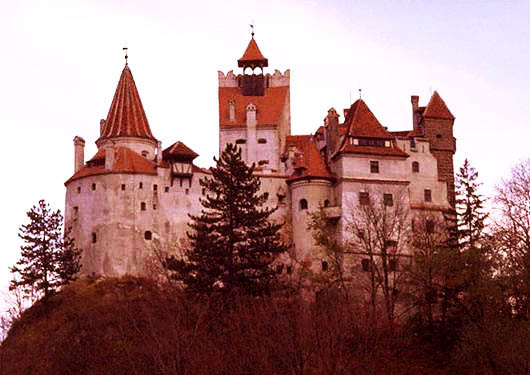
Count Dracula, also known as Vlad the Impaler of Transylvania, was a real life 15th Century iron-fisted ruler who delighted in putting his opponents to death by kebabing them on long poles. His character, sufficiently established in bloodlust, was an ideal adaptation for the human vampire of popular mythology. The author of Dracula, Bram Stoker, used the 13th Century Transylvania Bran Castle as a template for the character’s lair. This coincidental connection has certainly not stopped the locals capitalising on its infamy.
The region of Transylvania, meaning 'beyond the forest', is also for real. Occupying almost all of western Romania it is an area immersed in folklore and legend. Today it serves an agricultural and industrial function in the country's recovering economy and draws an increasing number of tourists as the word spreads about the superb castles, churches and civic constructions in cities like Alba Iulia, Cluj-Napoca, Sibiu, and Sighişoara, many being listed by UNESCO in their prestigious World Heritage list.
Sighişoara, for example, typifies the ancient heritage of Romania and is described by UNESCO as “an outstanding example of a small fortified city in the border region between the Latin-oriented culture of central Europe and the Byzantine-Orthodox culture of south-eastern Europe.” But you don’t need to be an academic to appreciate the rich history. Just walk along the narrow, rough cobblestoned alleys and streets, past the imposing 12th Century, Saxon built Citadel and into the medieval German inspired squares. It’s hard to imagine such evil spawned in this delightful town of just 30,000 inhabitants - this is the real birthplace of Vlad the Impaler!
The rich Transylvanian plateau drains via numerous rivers and tributaries into the mighty Danube. The burgeoning river cruises so popular further to the west are quickly working their way toward Bucharest as the luxury vessels search for new waters to explore. Travel to the mouth of the iconic river and you'll find yourself in the very beautiful and often overlooked Danube Delta region, described by UNESCO as 'the largest and best preserved of Europe's deltas.'
The half million hectare biosphere reserve hosts over 300 species of birds as well as 45 freshwater fish species in its numerous lakes and marshes. It is fast becoming Europe's most exciting area for eco-tourism in a continent starved for such experiences and the modern, sensitive traveller can stay at one of the only 5-star resorts in Romania built especially to satisfy fussy, environmentally-conscious visitors and enthusiastic fishermen.
In recent years, Europe has been struggling to reinvent itself. Common currencies, NATO and a constantly controversial European Union has encouraged travellers to look beyond the well-trodden paths of France, Spain, Germany and Italy. The 'rediscovery' of Romania has revealed a country abundant in magnificent architecture, overflowing with unspoiled villages and towns and swathed in refreshing forests. The people, largely unexposed to the rigours and pressures of 'western' ways are warm and welcoming and offer unusual relief from the hardcore tourist culture of old Europe.
Subscribe to:
Posts (Atom)